Why One-Size-Fits-All Learning No Longer Works?
Every child is different. As parents, we see it every day—one child learns best by reading, another by doing, and another by simply watching and asking questions. Yet for years, education followed a one-size-fits-all approach, where every student was expected to learn at the same pace, in the same way, and be assessed using the same yardstick.
Modern education has evolved, and rightly so. Today, the focus has shifted to personalised learning—an approach that recognises individual strengths, learning styles, and areas that need support.
At AVIN International School, Kengeri, Bangalore, personalised learning is not just a concept; it is a classroom reality. By aligning the CBSE curriculum with student-centric teaching strategies, AVIN ensures that every child is seen, heard, and supported.
In this blog, we’ll explore what personalised learning truly means, why it matters in the CBSE framework, and how AVIN International School implements it to help students thrive academically, emotionally, and socially.
What Is Personalised Learning?
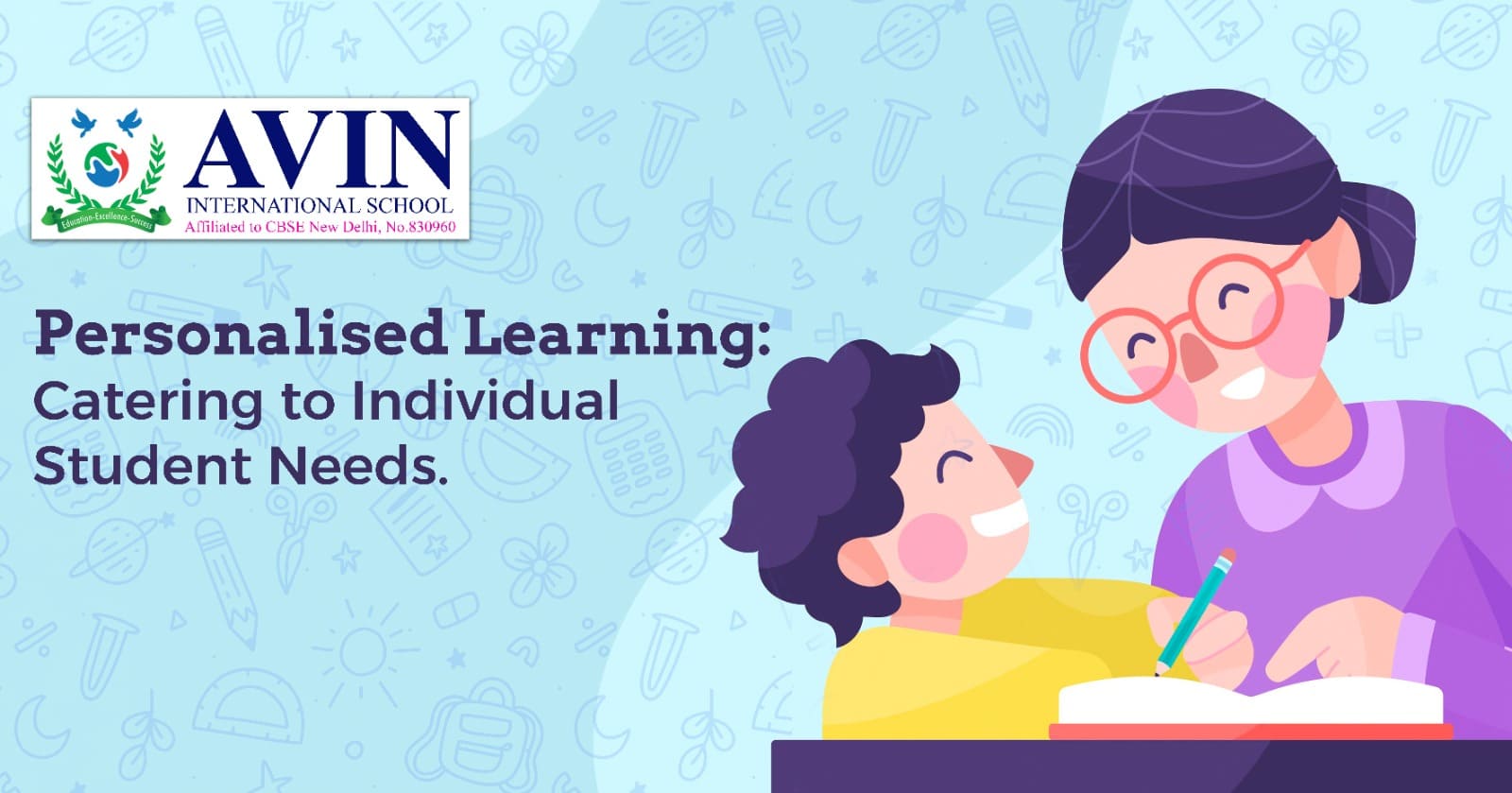
Personalised learning means adapting teaching methods, pace, and support to suit individual students, rather than expecting all students to fit into a rigid system.
In practical terms, personalised learning involves:
- Teaching the same concept in different ways
- Allowing students to learn at a pace comfortable for them
- Offering extra support where needed and enrichment where possible
- Recognising that intelligence shows up in many forms—not just marks
At AVIN International School, personalised learning goes beyond academics. It also considers emotional well-being, confidence levels, interests, and learning behaviour—creating a well-rounded educational experience.
Why Every Child Learns Differently?
Parents often ask, “Why does my child struggle in one subject but excel in another?”
The answer lies in understanding how children learn.
Common differences among learners include:
- Learning pace: Some children grasp concepts quickly; others need repetition and time
- Learning styles: Visual, auditory, kinesthetic, or a mix
- Strengths: Academics, sports, creativity, leadership, communication
- Challenges: Attention span, confidence, language barriers, exam anxiety
At AVIN International School, teachers are trained to recognise these differences early. Instead of labelling students as “slow” or “weak,” the focus is on identifying what support or challenge each child needs.
Personalised Learning Within the CBSE Framework
A common misconception is that CBSE is rigid and exam-centric. In reality, the CBSE curriculum—especially under NEP 2020—actively supports personalised learning.
CBSE encourages:
- Continuous and formative assessment
- Activity-based and experiential learning
- Project work and real-world application
- Skill development alongside academics
AVIN International School, Kengeri leverages this flexibility within CBSE to design learning experiences that are structured yet adaptable—maintaining academic rigor while supporting individual growth.
How AVIN International School Implements Personalised Learning?
This is where AVIN truly stands out.
1. Individual Student Assessment & Observation
Personalised learning begins with understanding the child.
At AVIN International School:
- Teachers continuously observe classroom behaviour and engagement
- Regular assessments help identify learning gaps early
- Emotional and behavioural cues are taken seriously
- Progress is tracked beyond test scores
This allows teachers to respond proactively rather than reactively.
2. Differentiated Teaching Strategies in the Classroom
Instead of delivering one lecture for all, teachers at AVIN use differentiated instruction, such as:
- Teaching the same topic using visuals, stories, activities, and examples
- Small-group instruction based on learning needs
- Peer learning and collaborative tasks
- One-on-one teacher interaction when required
This ensures that students remain engaged, confident, and curious.
3. Personalised Academic Support
Not every child needs the same level of support—and AVIN respects that.
Support systems include:
- Remedial classes for students needing extra reinforcement
- Enrichment activities for advanced learners
- Flexible pacing without pressuring students
- Focused support during transitions between grades
Importantly, students are never singled out or compared—support is offered discreetly and positively.
4. Technology-Enabled Personalised Learning
Technology plays a key role in modern personalised education.
At AVIN International School:
- Smart classrooms enhance interactive learning
- Digital tools support self-paced learning
- Teachers use performance data to track progress
- Learning becomes engaging rather than intimidating
Technology is used as a support tool, not a replacement for human connection.
Supporting Different Types of Learners
Supporting Slow or Struggling Learners
Some children need more time—and that’s perfectly okay.
AVIN supports them by:
- Re-teaching concepts using different methods
- Encouraging questions without fear
- Building confidence gradually
- Avoiding academic pressure and unhealthy comparison
Challenging High-Performing Students
High achievers also need personalised learning—just in a different way.
AVIN provides:
- Advanced projects and problem-solving tasks
- Leadership roles in class activities
- Exposure to competitions and Olympiads
- Opportunities that prevent boredom and disengagement
Supporting Emotional & Behavioural Needs
Learning is deeply connected to emotional well-being.
AVIN International School focuses on:
- Teacher sensitivity and empathy
- Counselling and mentoring where required
- Emotional intelligence development
- Creating a safe, inclusive classroom culture
The Role of Teachers in Personalised Learning
At AVIN, teachers are not just instructors—they are mentors and facilitators.
Their role includes:
- Understanding each child beyond marks
- Adapting teaching styles
- Offering constructive feedback
- Encouraging curiosity and independence
Continuous teacher training ensures that educators are equipped to support diverse learners effectively.
The Role of Parents in Personalised Learning
Personalised learning works best when school and parents collaborate.
Parents can support by:
- Observing their child’s learning patterns
- Communicating openly with teachers
- Encouraging strengths beyond academics
- Avoiding comparison with peers
At AVIN International School, Kengeri, regular communication keeps parents informed and involved in their child’s learning journey.
Benefits of Personalised Learning for Students
When learning is personalised, students experience:
- Improved academic confidence
- Better conceptual understanding
- Reduced exam stress
- Higher classroom engagement
- Stronger emotional well-being
- Development of independent learning skills
These benefits extend far beyond school years.
Real-Life Classroom Scenarios (Illustrative Examples)
Scenario 1:
A student struggling with mathematics improves significantly when concepts are taught using hands-on activities and visual models instead of worksheets.
Scenario 2:
A shy student gains confidence through personalised encouragement and small leadership roles in group activities.
Scenario 3:
A high-performing student stays motivated through advanced projects and research-based learning.
These everyday moments reflect how personalised learning transforms classrooms at AVIN.
Challenges in Personalised Learning (And How AVIN Addresses Them)
Common Challenges:
- Diverse classroom needs
- Time management
- Curriculum deadlines
- Assessment tracking
AVIN’s Approach:
- Structured lesson planning
- Teacher collaboration
- Use of technology
- Balanced academic policies
This ensures consistency without compromising individuality.
Why Personalised Learning Matters for the Future
The future demands:
- Critical thinkers
- Problem solvers
- Emotionally intelligent individuals
- Adaptable learners
Personalised learning prepares students not just for exams—but for life. At AVIN International School, education is about nurturing confident individuals ready to face real-world challenges.
Why Parents in Kengeri Choose AVIN International School?
Parents trust AVIN because of:
- Strong academic foundation
- Individual attention for every child
- Safe and inclusive environment
- Transparent communication
- Commitment to holistic development
Conclusion: Every Child Deserves to Learn Their Way
Every child is unique—and their education should be too.
At AVIN International School, Kengeri, Bangalore, personalised learning ensures that students are not forced to fit into a system, but are supported, encouraged, and challenged according to who they are.
Visit the campus, interact with teachers, and experience how AVIN International School supports every child’s learning journey—their way.
FAQs
1. What is personalised learning in schools?
Personalised learning adapts teaching methods, pace, and support to suit each student’s individual needs and strengths.
2. Is personalised learning suitable for CBSE schools?
Yes. The CBSE framework supports continuous assessment, activity-based learning, and skill development—all essential for personalised learning.
3. How does AVIN International School support slow learners?
Through remedial classes, differentiated teaching, confidence-building strategies, and patient guidance.
4. How are advanced learners challenged at AVIN?
Through enrichment activities, leadership roles, advanced projects, and competitions.
5. Do parents play a role in personalised learning?
Absolutely. Collaboration between parents and teachers strengthens personalised learning outcomes.